

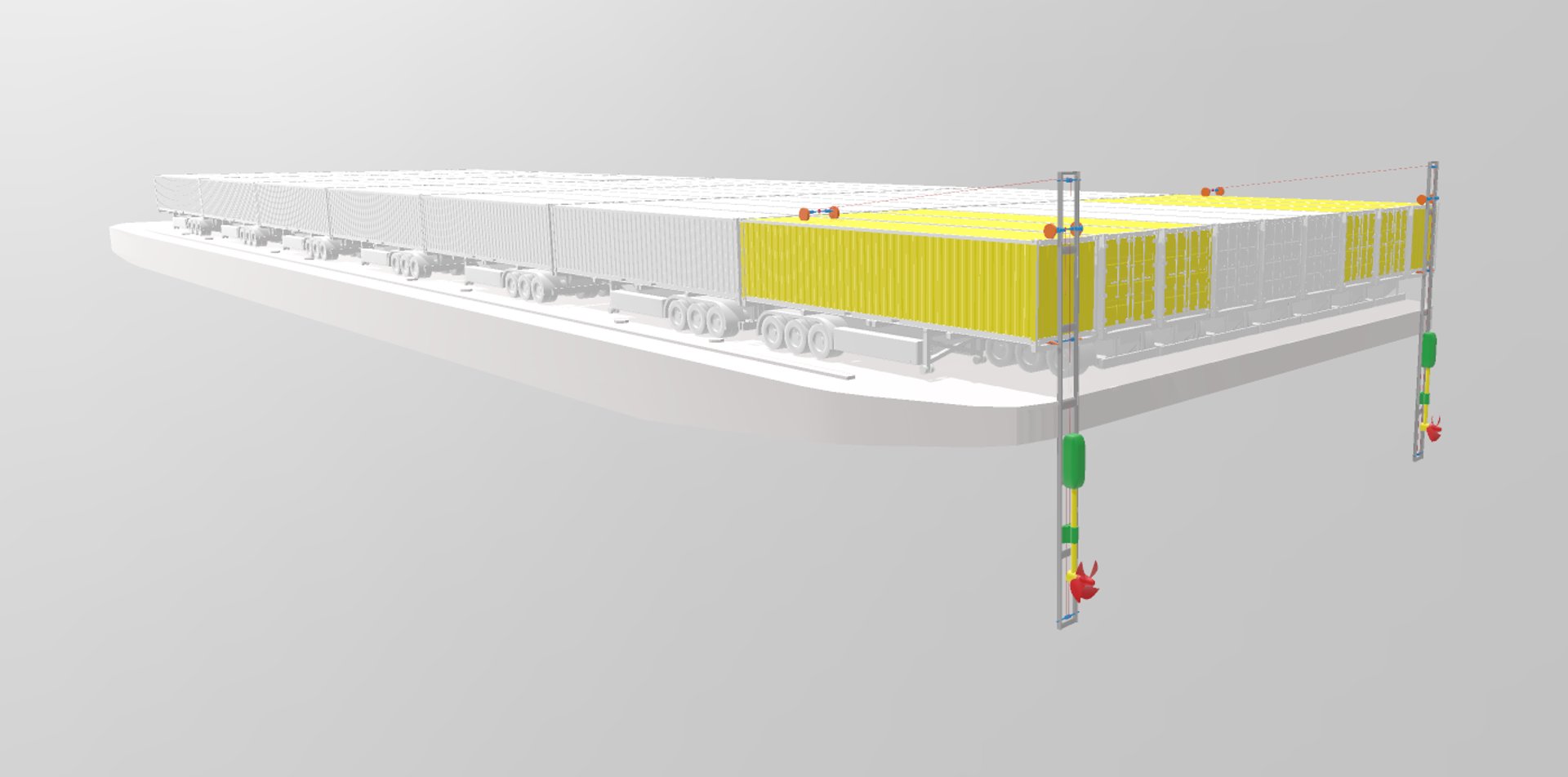
Improving socioeconomic activity by the use of clean energy in waterway transport
Discover how our innovative portable electric propulsion system enhances waterway transport efficiency. This technology not only reduces operational impact but also supports riverside communities by providing green energy solutions, fostering economic growth, and transitioning away from diesel dependency. Join us in transforming the future of sustainable transportation on the waterways.
As an example, the transport of 60 containers of cargo on a barge on the Amazon River involving a pusher with a 755 hp Diesel Engine and an average consumption of 125 l/h on the Belém x Macapá x Belém, a trip that lasts on average 72 to 80 hours round trip, incurring a total average consumption of 9,500 liters of marine diesel. Considering the sum of 80 trips per year, results in an average annual consumption of 760 thousand liters of fuel which implies the emission of 2,000 tons of CO2 and high cost in transportation (US$ 760.000 of fuel w/o diesel motor maintenance).
On the other hand, two units of the SPPEE, each with 10 MWh of electrical energy storage capacity in lithium iron phosphate batteries can push 60 cargo containers on a barge on the Amazon River on the Belém x Macapá stretch. The expected savings in spending on energy is at least 80% (US$ 0.25/kWh diesel versus US$ 0.05/kWh electric), which results in US$ 600.000 per year savings when using electric energy from hydroelectric or solar power.(80%x760kl*US$1.00).