

Shipped
Portable
Propulsion
Electric
Engine
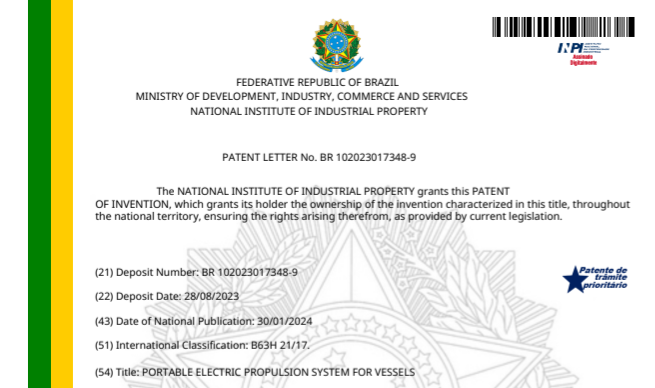
Enables Energy Transition in Waterways
Who We Are:
Topsensor Industry, Commerce and Services Ltd.
Our Goals:
Presenting our patented and innovative solution: SPPEE.
Demonstrate how SPPEE transforms waterway transport into a more sustainable, efficient and economical operation.
Invite you to a strategic partnership towards a greener future.
Water transport: Hostage to Diesel
Dependence on fossil fuels (diesel) with high costs:
Direct impact on the profitability of logistics operations
Severe Environmental Impact:
GHG (CO2) emissions and air pollutants
Damage to river ecosystems and socioeconomic activity
Barriers to electrification for diesel replacement:
Conversion of existing vessels: high cost and downtime
Acquisition of new electric vessels: Prohibitive investment
Patented solution
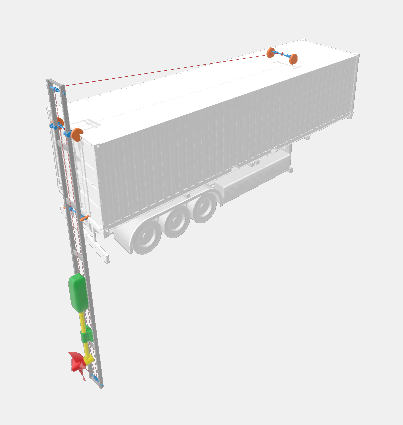
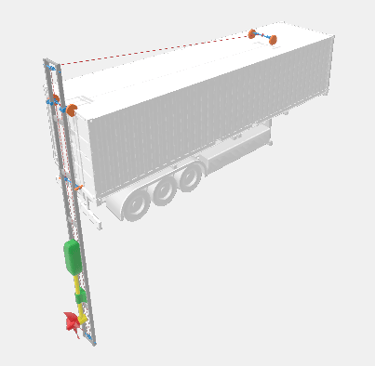
4MWh BESS module (40 ft) on trailer with attached propeller.
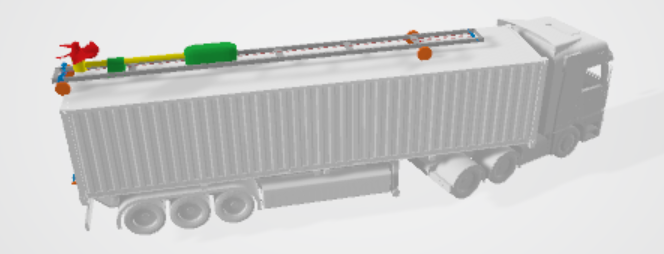
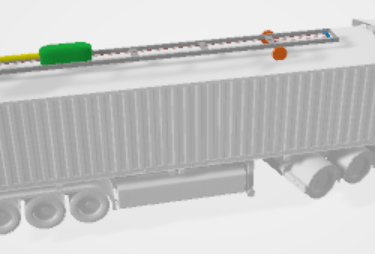
Modularity:
Allows you to scale the energy capacity according to the vessel's needs and autonomy.
Portability:
Designed to be
embarked and disembarked
as a standard cargo container.
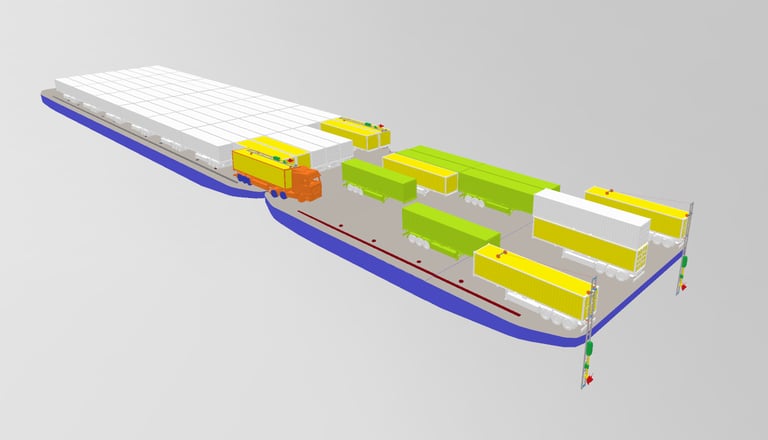
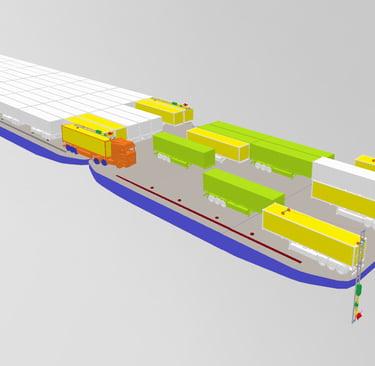
How it works:
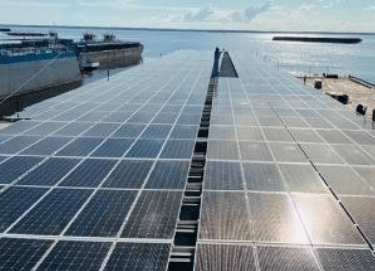
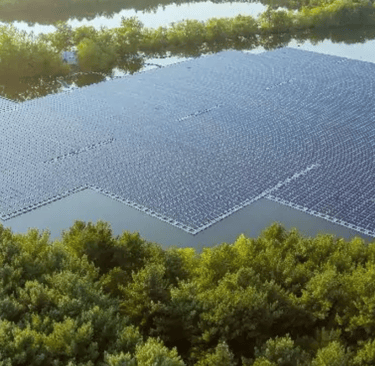
SPPEE modules are electrically charged at terminals supplied with green energy and loaded onto ferries.
The modules use clean energy stored in batteries for electric propulsion, replacing diesel with 80% savings.
Discharged modules can be exchanged for charged ones at strategic points along the waterway.


Non-green case study:
Diesel waterway transport on the Belém x Macapá x Belém route
Considering the transportation of 60 cargo containers by barge on the Amazon River.
Pusher with a 755 hp Diesel Engine and average consumption of 125 l/h on the Belém x Macapá x Belém stretch.
A trip that lasts on average 72 to 80 hours round trip, incurring an average total consumption of 9,600 liters of marine diesel.
The sum of 80 trips per year results in an average annual consumption of 760 thousand liters of fuel, which implies the emission of 2,000 tons of CO2 and high transportation costs (US$ 760,000/year).
Green case study:
Electric waterway transport on the Belém x Macapá x Belém route with savings of US$ 600,000/year
Scenario:
A ferry with a capacity of 3,000 tons carrying 60 containers.
Our Solution with savings of US$600.00/year:
10 SPPEE modules on board to transport 50 cargo carts for 80 hours.
Total energy capacity: 10 modules x 4 MWh/module = 40 Mwh.
Total added weight: 10 x 30 tons/module = 300 tons.
Impact on reducing the ferry's useful load capacity by only 10% (300t from 3000t).
The cost of green electricity is 20% of the equivalent diesel energy.
$760,000/year x 80% equals at least a savings of $600,000/year
Sustainability, Economy and Flexibility
Unparalleled Sustainability:
Zero Emissions: Does not produce CO2 or other pollutants.
Clean Energy: Uses renewable sources for recharging (hydro and solar).
Drastic Operational Savings:
Replacing diesel with electricity (80% savings)
Lower maintenance: electric vs. diesel engines
Flexibility and Operational Efficiency:
Electrification without structural modifications or downtime.
Power capacity adjustable to route demand.
Fuel savings / reduced maintenance: fast payback.
Socioeconomic Advantages and Regional Development
Promotion of the Riverside Economy:
Clean, low-cost electricity for isolated communities along waterways.
It enhances sustainable agricultural, fishing and extractive productivity.
Reduces dependence on diesel for power generation.
Electricity in containers can be brought to communities, initially.
Generation of New Opportunities:
New jobs in the operation and maintenance of SPPEE modules and charging infrastructure.
Encouraging the implementation of green energy plants (solar, wind) along waterways, in a second phase, creating a new value chain.
Regional Integration and Development:
Reduction in overall logistics costs, benefiting the flow of local production and the competitiveness of regional products.
Improved quality of life in communities with access to cheaper, cleaner energy and reduced noise and air pollution.
Strengthening waterway transport as an essential vector for the integration and sustainable development of the Amazon and other regions.
A Giant Market: Brazilian Waterways
River Cargo Transportation:
Ferries, pushers and cargo trains (grains, minerals, liquids and gases).
Initial focus on the Amazon, Paraná-Tietê and Tocantins-Araguaia basins.
Passenger and Vehicle Transportation:
Crossing ferries and liner vessels.
Transportation of stored electrical energy:
Socioeconomic value in promoting the activity of riverside populations
Market Potential:
Brazil has 25,000 km of waterways, 16,000 km of which are navigable in the Amazon.
Growing pressure for sustainability and energy efficiency.
Business models:
Sale and Rental of SPPEE Modules:
Preventive and corrective maintenance contracts for modules and systems.
Energy as a Service (EaaS):
Battery Swapping: Network of quick exchange points for charged modules and discharged ones.
Recharge and Management:
Optimized charging services at terminals, using renewable energy sources.
Additional revenue from the generation and sale of carbon credits:
The significant reduction in CO2 emissions generates carbon credits which can be traded.
Challenges and Mitigation Strategies
Regulation and Approval:
Specific standards for large batteries (LTO/LFP) in maritime/river environments;
SPPEE technology and module approval processes.
Obtaining licenses and approvals for the operation of vessels with SPPEE and for the module exchange infrastructure.
Mitigation:
Proactive engagement with ANTAQ, Brazilian Navy and international regulatory bodies (IMO);
Partnerships with specialized certification bodies;
Dedicated legal and regulatory team;
Training and Qualification:
Obstacle: Need to train crews, maintenance teams and port operators for the handling and operation of SPPEE.
Mitigation:
Development of comprehensive training programs (theoretical and practical);
Creation of training and simulation centers;
Operator certification in partnership with educational institutions and competent bodies.
The Future of Waterway Green Energy Starts Now!
Our Invitation:
For the Planet: Drastic reduction of emissions.
For Your Business: Substantial savings and operational efficiency.
For Communities: Development and access to clean energy.
We are looking for strategic partners to:
Pilot projects and validation at scale.
Investment to scale production and service network.
Collaboration in the development of green energy infrastructure.